
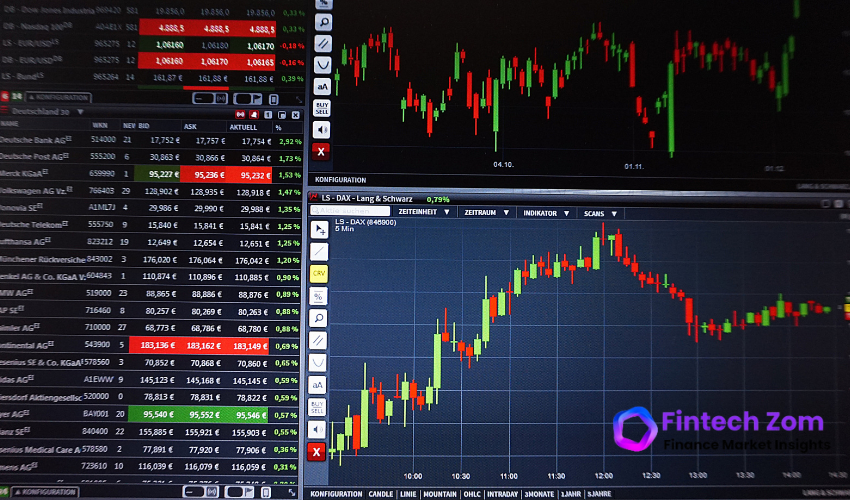
FintechZoom.com DAX40 recognizes that interest and builds a focused suite of pages — explainers, guides, company lists, and trading primers — aimed at turning raw index data into usable insight. If you want a readable, practical place to learn what the DAX40 is doing and why it matters, FintechZoom offers a useful entry point. What is the DAX40? History, structure, and the “40” change
Originally launched as the DAX (Deutscher Aktienindex), this benchmark has evolved into a 40-company index that tracks the performance of Germany’s largest and most liquid publicly-traded companies listed on the Frankfurt exchanges. The migration from a 30-company index to 40 constituents reflected a broader push for greater diversification and representation among blue chips. Beyond the number of companies, the DAX is a total-return index in practice — meaning dividends historically play a part in its economic narrative — and it’s maintained by Deutsche Börse, which provides the official methodology and rebalancing rules. The index captures a large share of listed German market capitalization and serves both as a benchmark for passive products and as a watchlist for active managers.
How FintechZoom.com DAX40 — pages, guides, and features
FintechZoom.com DAX40 with a combination of accessible explainers and practical trading-oriented content. Its DAX-specific pages typically include: an overview of what the index tracks, lists of constituent companies, periodic features that analyze top movers, and how-to guides aimed at traders who want to gain exposure via CFDs, futures, ETFs, or individual stock picks. The site also publishes DAX-focused “guides” that walk readers through basics — for example, how the DAX moves in relation to macro releases, or how to interpret sector composition when constructing a European equity view. This combination makes FintechZoom useful for both newcomers and experienced traders who want concise, actionable context.
Reading a DAX40 company list: sectors and heavyweight names
One of the most practical features for investors is the DAX constituent list. The DAX40 spans multiple sectors: industrials and manufacturing (Siemens and related firms), chemicals and materials, automotive giants (Volkswagen, BMW), healthcare and life sciences (e.g., Merck), technology (SAP), and heavyweights in services and logistics. These sector concentrations matter: the DAX’s sensitivity to industrial cycles and global trade flows can often outpace more domestically-oriented indices. That makes the DAX particularly responsive to global trade data, euro-area PMI prints, and commodity-price swings. FintechZoom’s company pages and sector summaries let you quickly scan who’s driving the index at any given time.
Why sector mix matters
It’s worth pausing on sector mix because it changes the way you trade or allocate to an index. A DAX dominated by industrials and autos will behave differently in a global slow-down than an index overweight in tech or consumer staples. FintechZoom’s DAX pages typically flag sector leaders and recent movers, making it easier to diagnose whether a daily move is idiosyncratic (company-specific) or systematic (macro-driven). Use that driver diagnosis to decide whether to hedge with index products or take single-stock positions.
Using FintechZoom’s DAX coverage for research and trading — tools & workflow
FintechZoom’s DAX content is designed to fit into a simple, repeatable workflow for both investors and traders:
-
Start with the overview page — read the short explainer to confirm what the DAX measures and its current structural highlights (methodology, total-return nature, number of constituents). FintechZoom provides these primers in a clear, short format. FintechZoom+1
-
Scan the constituents table — identify the top-weighted names and recent movers. FintechZoom’s company lists and sector breakdowns help you see which stocks are driving returns and which sectors are showing strength or weakness.
-
Open quick news pieces — FintechZoom often links DAX moves to headlines (earnings surprises, regulatory news, economic prints). Read the linked snippets to decide whether a move is temporary or a potential regime change.
-
Use guides for trading mechanics — if you want to take exposure via derivatives or ETFs, FintechZoom’s guides explain common instruments used to trade the DAX, from futures to leveraged ETFs and CFDs. Those guides are practical and targeted at retail and semi-professional traders.
Strengths and limitations of fintechzoom.com dax40 coverage
Strengths:
-
Clarity and accessibility: FintechZoom writes for readers who want quick, clear explanations without heavy academic jargon. That makes it fast to learn the essentials.
-
Practical guides: The site offers trading-oriented guides (how to trade the DAX, instruments to consider), which are specifically useful to active retail traders.
-
Company and sector focus: Constituents lists and sector breakdowns help you link index moves to companies — crucial when a few large caps dominate performance.
Limitations:
-
Not a primary data feed: For ultra-low-latency trading or institutional execution you’ll still need direct exchange feeds or a professional terminal; FintechZoom is a market-news and research layer rather than an execution platform.
-
Depth varies by topic: For very technical questions (derivatives microstructure, regulatory filings), specialist sources or primary documents from Deutsche Börse and corporate filings provide the definitive answers. Use FintechZoom as a fast starting point, not the final authority.
A practical walkthrough: from headline to trade using fintechzoom.com dax40 resources
Here’s a step-by-step example you can apply anytime the DAX posts a sudden move:
-
Headline hit: A big macro print or a surprise earnings result appears. Start at FintechZoom’s DAX front page or related DAX40 article to capture the immediate narrative. The site will often summarize which companies led the move and link to specific news items.
-
Constituent check: Open the DAX constituent table on FintechZoom and note the top-weighted movers. Ask: is the headline tied to a single name (idiosyncratic) or many names in the same sector (systematic)?
-
Depth reading: Click the relevant company pages or the site’s news pieces for quotes, management comments, or analyst color. FintechZoom often links to primary documents or press releases — follow those links when the trade is material.
-
Instrument selection: If you want index exposure, use FintechZoom’s trading guide to decide among futures, ETFs, or CFDs. The guide lays out pros and cons — margin, cost, and liquidity considerations — so you can match instrument risk to your thesis.
-
Cross-check with primary sources: Before placing any sizable trade, confirm the material fact via the company’s IR releases or Deutsche Börse’s methodology/announcements. This step reduces execution risk from misreporting.
How FintechZoom’s DAX coverage compares to other sources
FintechZoom sits in the “accessible markets newsroom” tier. Compared to specialized data platforms like Bloomberg or Refinitiv, FintechZoom offers less depth in raw data and customization, but it compensates with clearer, instructional writing and a focus on practical trader guidance. Compared with other market websites, FintechZoom’s value is its readability and targeted guides for retail and educational audiences. For most users, the best approach is complementary: use FintechZoom for narrative and primers, and pair it with a data provider or the exchange site for definitive datasets and filings.
Tips and best practices when using fintechzoom.com dax40 research
-
Bookmark the DAX constituent and guide pages: Keep the DAX40 company list and the trading guide for easy reference — they’re the quickest way to map headlines into market impact.
-
Watch the heavyweights: A handful of large-cap companies often move the index. Monitor those names separately to anticipate index swings.
-
Use explainers before acting: FintechZoom’s short explainers reduce the chance of reactionary trades. Read a one-paragraph primer before taking a position.
-
Cross-verify for regulatory or corporate actions: When the move is linked to regulation or corporate filings, always check the regulator or company press release — FintechZoom will point you there, but the primary source is the authority.
-
Know instrument differences: A DAX ETF, a CFD, and a futures contract are different animals. Use FintechZoom’s guides to understand roll, margin, and cost before picking one.
Conclusion — FintechZoom as part of your DAX toolkit
Fintechzoom.com dax40 coverage blends approachable explainers, constituent lists, and practical trading guides to give readers a fast path from headline to perspective. It’s especially useful for retail traders, students, and professionals who want readable context without the overhead of a full trading terminal. For short-term traders it provides a practical starting place; for longer-term investors it helps translate macro and sector themes into an index-level view. Always complement FintechZoom with primary sources — Deutsche Börse for methodology and company investor pages for filings — but include FintechZoom in your toolkit if you value clear narratives, sector scans, and hands-on trading primers.